
8 Reasons Why Today's CFOs Must Embrace Strategic Financial Management

Over the past few years, the role of the CFO has evolved from primarily being responsible for financial management and reporting to taking on a strategic leadership role within the organization. As businesses become more complex and competitive, CFOs must embrace a strategic financial management approach to help their organizations make informed decisions, manage risk, and drive growth. This blog post will explore why strategic financial management is critical for today’s CFOs and how they can incorporate it into their organizations.
Understanding Strategic Financial Management
Strategic financial management is a holistic approach to managing finances that moves beyond the traditional roles of bookkeeping and accounting. It encompasses all aspects of an organization’s finances, from budgeting, forecasting, cost control, cash flow management, and risk assessment to capital investments, mergers, and acquisitions. CFOs must proactively protect and grow their organization’s financial resources.
Why CFOs Must Embrace Strategic Financial Management
The Changing Competitive Landscape
Today’s business environment has more competitors and disruptive technologies than ever before. To succeed, CFOs must be able to identify vulnerabilities and opportunities in their industry so they can make informed decisions about where to allocate resources and how to capitalize on opportunities. This can only be done with an in-depth understanding of the financial environment and trends.
The Expectations of Investors and Analysts
CFOs must be able to make decisions that will not only benefit their organizations but also demonstrate value to investors and analysts. They need to understand the financial landscape, provide accurate data and insights, manage risk appropriately, and deliver on expectations. This requires a detailed understanding of the organization’s finances and the ability to develop strategies that create shareholder value.
Need for Accurate Forecasting and Budgeting
CFOs must be able to accurately forecast future cash flows, assess future performance, and predict potential financing needs to create a reasonable budget that supports the organization’s goals. This requires a thorough understanding of financial data and the ability to analyze it objectively. This information is necessary to decide where resources should be allocated and how to optimize expenses.
The Increasing Complexity of Financial Reporting
As businesses grow, the complexity of their financial reporting also increases. With new regulations and accounting standards constantly being introduced, it’s also becoming harder for CFOs to keep up with all the changes.
As a result, CFOs must comprehensively understand the organization’s finances and accurately report on it promptly to ensure that their company complies with all the latest requirements. This will help to minimize risk and increase the accuracy of financial information. This also requires them to effectively manage short-term and long-term financial resources to meet their goals.
Increased Regulatory Demands
An increase in legislation and regulations means CFOs must continually assess their organization’s compliance and risk profile. They must stay updated on changes, adjust policies accordingly, and manage risks appropriately. This requires understanding the organization’s financial situation and the ability to make strategic decisions about how to mitigate potential risks best.
The Pressure to Do More with Less
In many organizations, budget cuts are a fact of life. To make ends meet, CFOs must find ways to reduce costs, increase efficiency, and maximize profits without sacrificing quality. To do this effectively, they must have an in-depth understanding of their organization’s financial position and be able to analyze data quickly so they can make informed decisions about where to allocate resources. By being resourceful, CFOs can find new and innovative ways to make their organizations more efficient and effective.
The Need for Continuous Improvement
Today’s CFOs cannot simply rest on their laurels; they must always look for ways to improve their company’s financial performance. That might mean finding new efficiencies in how work is done or implementing innovative customer service or product development approaches. Whatever the area of focus, continuous improvement is essential for today’s CFOs,
especially since their jobs could be at stake if they don’t deliver results.
The Importance of Being Data-Driven
To make informed decisions, CFOs must have access to accurate and up-to-date data. This means they need to develop systems and processes that allow them to quickly analyze the financial information at their disposal so they can identify potential risks and opportunities.
Without this data-driven approach, CFOs are flying blind when making decisions about their organizations’ future. Making decisions based on accurate data will help CFOs to make sound financial choices that will benefit their organizations in the long run.
Today’s CFOs must understand the complexities of financial reporting, be able to do more with less, meet investors’ and analysts’ expectations, strive for continuous improvement, and be data-driven. This will enable them to make sound decisions to help their organizations succeed in the increasingly competitive marketplace. By embracing strategic financial management, CFOs can make sure their organizations remain competitive and profitable in the long run.
Related Posts

Market volatility can test even the most confident investors. Sharp price swings, economic uncertainty, and unexpected global events often trigger emotional reactions that lead to rushed financial decisions. While some investors panic during downturns, professional fund managers approach volatility with…
By Team Accountiod
A cash loan in Singapore can get money into your hands within hours, not weeks. Workers, parents and small business owners across the island turn to licensed moneylenders when a bank’s timeline does not match their urgency. Whether you need…
By Team Accountiod

Buy a car is a thrilling experience, until the aspect of financing comes in between. Conventional banks tend to deny applicants with one credit report, and thousands of purchasers are left with no option. That is the very place that…
By Khushboo Chhibber

At a time when the American financial world is quickly becoming digital-first, Coyyn.com Digital Money is poised to be a central point of interaction between cryptocurrency education, gig economy services and wealth management. Table of Contents: Why Digital Money Matters…
By Khushboo Chhibber

A gate provision is a legal provision in hedge fund documentation that restricts the amount of money that may be withdrawn by investors one redemption period at the fund level or on an individual investor basis. Table of Contents: What…
By Khushboo Chhibber
Every business owner recognizes this scenario: working tirelessly, generating strong sales, but not seeing those results reflected in the bank account. This is a common situation among small business owners. The distinction between a struggling start-up and a sustainable, profitable…
By Team Accountiod
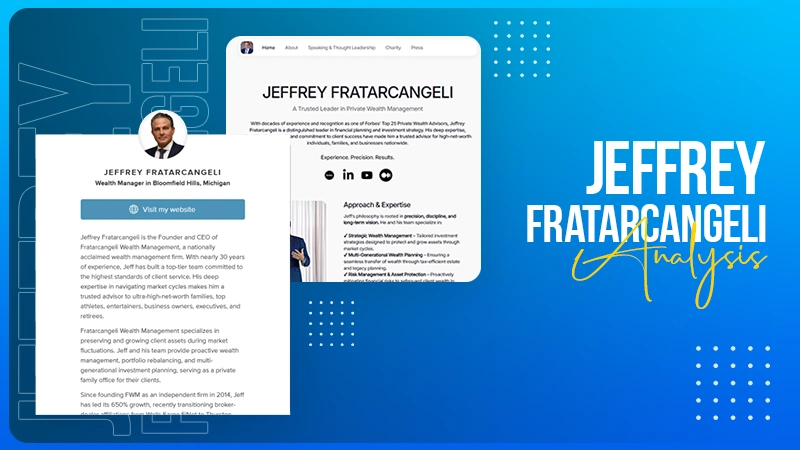
Markets hate uncertainty. This fundamental truth guides investors through volatile periods, especially when trade policies shift. In an interview on Detroit’s “The Pulse,” wealth advisor Jeffrey Fratarcangeli offered insights into how increasing clarity around tariff policies impacts market performance despite…
By Team Accountiod

In the modern financial landscape that is rapidly changing, businesses and investors are dependent on platforms capable of providing real-time and precise insights. FintechZoom.com Business has made it its mission to be one of such platforms, i.e. providing financial news,…
By Aaron Harris

The digital age has brought a new face of financial structures to the world, and the most popular digital currency is currently the Bitcoin, representing cryptocurrencies. FintechZoom.com Bitcoin has become a trusted source of insights and analytics on Bitcoin among…
By Aaron Harris