
Capital management refers to the process of allocating and managing financial resources in a way that optimizes return while minimizing risk. In other words, it is about finding the right balance between risk and reward.
There are two main reasons why capital management is so essential for traders:
- It helps to protect your trading account from excessive losses; and
- It enables you to maximize your profits.
How can Traders Use Capital Management in Their Trading?
Risk Management
One of the most important aspects of capital management is risk management. It involves setting clear limits on the amount of capital you are willing to risk on any trade. For example, if you have an SGD10,000 trading account, you might set a limit of SGD200 per trade. If your trade loses, your account will only be down by 2%.
There are two main ways to manage risk:
- Position sizing refers to the number of contracts or shares you trade. If you are trading ten contracts and each contract is worth SGD10, then your position size is SGD100.
- Stop-loss orders are orders to sell a security when it reaches a specific price. Traders use them to limit losses in a trade. For example, if you buy a stock at SGD100 and place a stop-loss order at SGD90, your maximum loss will be SGD10 per share.
Money Management
Money management is another important aspect of capital management, referring to managing your money to maximize your profits and minimize losses.
There are three principal money management techniques that traders use:
- The risk-reward ratio is the ratio of the potential profit to the potential loss on a trade. For example, if the potential profit is SGD100 and the potential loss is SGD50, the risk-reward ratio is 1:2.
- Position sizing is the number of contracts or shares you trade.
- Trailing stop-loss orders are orders to sell a security when it reaches a specific price. Traders use them to lock in profits and limit losses in a trade. For example, if you buy a stock at SGD100 and place a trailing stop-loss order at SGD90, your maximum loss will be SGD10 per share.
Asset Allocation
Asset allocation is another important aspect of capital management and refers to investing your money in different asset classes, such as stocks, bonds, and cash. Asset allocation allows you to diversify your investment so that you are not overly exposed to any asset class.
For example, if you invest all of your money in stocks, you are taking on more risk than if you invest in a mix of stocks and bonds. On the other hand, if you invest all of your money in cash, you are not taking on enough risk to achieve your financial goals.
Portfolio Management
Portfolio management involves managing your investment portfolio to achieve your financial goals. There are two main types of portfolio management:
- Active portfolio management refers to actively buying and selling securities in your portfolio to generate profits.
- Passive portfolio management refers to holding securities for an extended period and not selling them unless there is a change in your investment goals.
Tax Planning
Tax planning is another important aspect of capital management and refers to minimizing your tax liability so that you can keep more of your money.
There are two main ways to minimize your tax liability:
- Investing in tax-advantaged accounts is investing in accounts such as a 401(k) or an IRA.
- Sell-losing investments refer to selling investments that have lost money so that you can offset your capital gains.
Estate Planning
Estate planning is the process of planning for the transfer of your assets after you die. It is essential because it allows you to control how your assets are distributed and minimize the taxes your heirs will have to pay.
There are three main aspects of estate planning:
- Wills are legal documents that specify how you want your assets to be distributed after you die.
- Trusts are legal entities that hold your assets and distribute them according to your wishes.
- Beneficiary designations are provisions in a contract that specifies who will receive your assets after you die.
If you’re interested in capital management, you could try here.
Related Posts
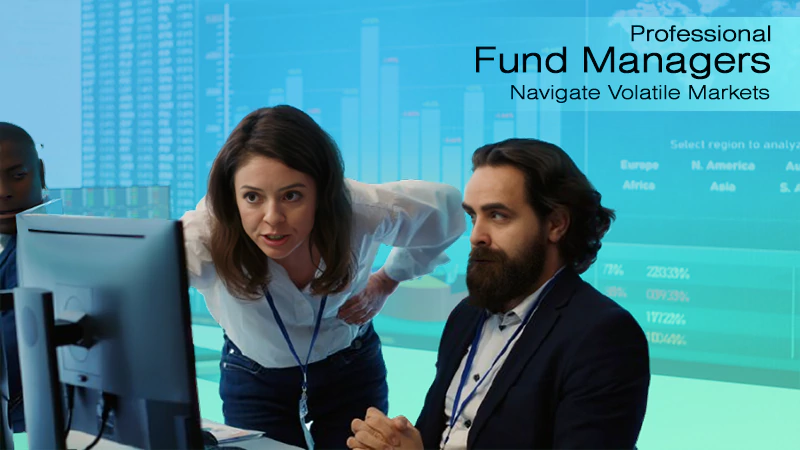
Market volatility can test even the most confident investors. Sharp price swings, economic uncertainty, and unexpected global events often trigger emotional reactions that lead to rushed financial decisions. While some investors panic during downturns, professional fund managers approach volatility with…
By Team Accountiod
A cash loan in Singapore can get money into your hands within hours, not weeks. Workers, parents and small business owners across the island turn to licensed moneylenders when a bank’s timeline does not match their urgency. Whether you need…
By Team Accountiod

Buy a car is a thrilling experience, until the aspect of financing comes in between. Conventional banks tend to deny applicants with one credit report, and thousands of purchasers are left with no option. That is the very place that…
By Khushboo Chhibber

At a time when the American financial world is quickly becoming digital-first, Coyyn.com Digital Money is poised to be a central point of interaction between cryptocurrency education, gig economy services and wealth management. Table of Contents: Why Digital Money Matters…
By Khushboo Chhibber
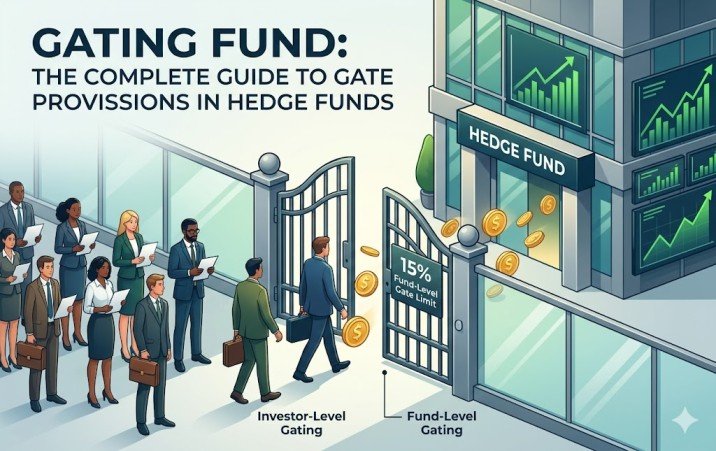
A gate provision is a legal provision in hedge fund documentation that restricts the amount of money that may be withdrawn by investors one redemption period at the fund level or on an individual investor basis. Table of Contents: What…
By Khushboo Chhibber
Every business owner recognizes this scenario: working tirelessly, generating strong sales, but not seeing those results reflected in the bank account. This is a common situation among small business owners. The distinction between a struggling start-up and a sustainable, profitable…
By Team Accountiod

Markets hate uncertainty. This fundamental truth guides investors through volatile periods, especially when trade policies shift. In an interview on Detroit’s “The Pulse,” wealth advisor Jeffrey Fratarcangeli offered insights into how increasing clarity around tariff policies impacts market performance despite…
By Team Accountiod
In the modern financial landscape that is rapidly changing, businesses and investors are dependent on platforms capable of providing real-time and precise insights. FintechZoom.com Business has made it its mission to be one of such platforms, i.e. providing financial news,…
By Aaron Harris
The digital age has brought a new face of financial structures to the world, and the most popular digital currency is currently the Bitcoin, representing cryptocurrencies. FintechZoom.com Bitcoin has become a trusted source of insights and analytics on Bitcoin among…
By Aaron Harris