
10 Must-Have Features In A Third-Party Risk Management Platform For Accountants
It was 3 AM when the numbers bled into each other—again. Sarah, a senior accountant, rubbed her temples, her screen a blur of endless spreadsheets. The quarterly close was due in six hours, and the last audit had flagged discrepancies. Her coffee had gone cold, her back ached, and her mind was a frayed wire. She wasn’t just crunching numbers; she was balancing on a tightrope over a canyon of desirability—where precision was demanded, but human limits were ignored.
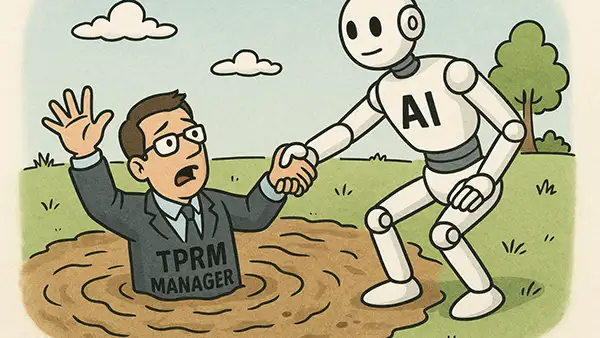
Then, the slip happened. A decimal is misplaced. A ripple that became a tidal wave. By sunrise, the error had cascaded into a compliance nightmare. Sarah’s story isn’t unique. In a world plagued with complacency, where automation is hailed as the savior, we forget: even the sharpest minds are human. The myth that “accountants are infallible” is a gamble—one you can’t afford. Before you automate, before you trust third-party tools blindly, ask: Do you know the risks?
- The High-Wire Act Of Financial Risk Management
- 1. Real-Time Vendor Risk Scoring (The Radar In The Storm)
- 2. Ai-Driven Anomaly Detection (The Silent Watchdog)
- 3. Automated Compliance Mapping (The Invisible Rulebook)
- 4. Contract Intelligence (The Fine Print Assassin)
- 5. Cybersecurity Threat Integration (The Firewall Before The Fire)
- 6. Workflow Automation With Human Oversight (The Safety Net)
- 7. Financial Health Monitoring (The Pulse Check)
- 8. Customizable Risk Thresholds (Your Business, Your Rules)
- 9. Audit Trail Immutability (The Unbreakable Chain)
- 10. Scenario Modeling (The Crystal Ball)
- The Tightrope And The Net
- Question To Reflect On:
The High-Wire Act Of Financial Risk Management
The financial world is a high-wire act. One misstep—a vendor’s breach, a compliance gap, a hidden inefficiency—and your entire ledger tumbles into chaos. In an era of rampant consumerism, where flashy tech promises salvation, the real differentiator isn’t just features—it’s guardrails.
Accountants don’t just track numbers; they safeguard trust. A single oversight can trigger regulatory fines, reputational damage, or financial ruin. That’s why a third-party risk management platform isn’t just optional—it’s the safety net every accounting team needs.
But not all platforms are created equal. Some are glorified spreadsheets with a dashboard; others are true risk intelligence systems. The difference? The right features. Here’s what your risk management platform must have to protect your team—and your business—from the unseen falls:
1. Real-Time Vendor Risk Scoring (The Radar In The Storm)
A static vendor list is like trusting a weather report from last week. Markets shift, regulations evolve, and a once-reliable supplier could be one scandal away from collapse. The best systems employ predictive analytics, identifying troubling patterns before they crystallize into full-blown crises. When a key supplier’s payment patterns begin mirroring those of previously bankrupt vendors, or when a subcontractor’s employee turnover spikes suspiciously, these platforms sound the alarm while there’s still time to pivot.
2. Ai-Driven Anomaly Detection (The Silent Watchdog)
Humans miss patterns. Machines don’t. Your hires, no matter how meticulous, suffer from pattern fatigue. Machine learning algorithms never blink. By establishing behavioral baselines across millions of transactions, AI-powered anomaly detection spots the microscopic irregularities that signal brewing trouble—the duplicate invoice that’s 1.7% higher than usual, the foreign transaction suddenly routed through an unusual intermediary bank.
3. Automated Compliance Mapping (The Invisible Rulebook)
Regulations are a labyrinth. GDPR, SOX, IFRS—each a moving target. Next-generation platforms maintain living maps of regulatory obligations, automatically cross-referencing vendor activities against hundreds of jurisdictional requirements. When new legislation passes or existing rules are amended, the system recalibrates its compliance parameters in real time, flagging any misalignment before it escalates into violation territory. Without it: Compliance gaps lead to fines, legal battles, and reputational damage.
4. Contract Intelligence (The Fine Print Assassin)
Buried clauses kill profits. Traditional contract management resembles archeology—laborious manual excavation for buried terms. AI-powered contract intelligence changes the game, extracting and structuring key provisions into searchable, actionable insights. The system doesn’t just archive contracts—it understands them, alerting teams to upcoming renewals, unfavorable terms, and even opportunities to renegotiate based on market shifts.
5. Cybersecurity Threat Integration (The Firewall Before The Fire)
A vendor’s weak security is your breach. Modern risk platforms don’t just assess vendors—they continuously monitor their digital health. By integrating with global threat intelligence feeds and dark web monitoring services, these systems detect compromised credentials, unpatched vulnerabilities, and suspicious network activity across your entire vendor network. When a supplier’s system shows signs of compromise, you receive alerts before the attackers pivot toward your systems. Minus this element, one vendor’s vulnerability becomes your data breach headline.
6. Workflow Automation With Human Oversight (The Safety Net)
Automation shouldn’t mean abdication. The future of accounting isn’t human versus machine—it’s the optimized collaboration between both. Intelligent workflow automation handles the repetitive heavy lifting—invoice matching, compliance checks, document routing—while reserving human judgment for nuanced decisions requiring professional skepticism. Over-reliance on AI leads to unchecked errors.
7. Financial Health Monitoring (The Pulse Check)
A vendor’s bankruptcy is your operational heart attack. Continuous financial monitoring transforms this reactive approach. By tracking real-time indicators like days sales outstanding (DSO), liquidity ratios, and even sentiment in earnings calls, the platform builds a living financial profile for each vendor. When troubling patterns emerge—a lengthening DSO coinciding with credit rating downgrades—the system triggers proactive mitigation strategies before supply chain disruptions occur.
8. Customizable Risk Thresholds (Your Business, Your Rules)
Not all risks warrant equal attention, and not all vendors pose equal threats. A one-size-fits-all risk framework inevitably wastes resources on low-impact concerns while missing true danger zones. Sophisticated platforms allow organizations to define risk parameters by vendor category, transaction type, and business impact.
9. Audit Trail Immutability (The Unbreakable Chain)
In disputes, investigations, or regulatory inquiries, documentation isn’t just evidence—it’s truth. Traditional audit trails, stored in centralized databases, remain vulnerable to manipulation, whether malicious or accidental. Blockchain-backed audit trails solve this definitively. Each action, approval, and modification gets cryptographically sealed in an unbroken chain of evidence.
10. Scenario Modeling (The Crystal Ball)
Hope isn’t a strategy. Risk management fails when it only responds to events already unfolding. True preparedness requires anticipating crises before they emerge. Advanced scenario modeling tools allow teams to stress-test their vendor ecosystems against dozens of potential disruptions—natural disasters, cyberattacks, geopolitical conflicts, and financial collapses.
The Tightrope And The Net
Automation isn’t about replacing accountants—it’s about giving them a net. In a culture drowning in data but starved for insight, the right platform doesn’t just manage risk—it prevents the slip before it happens. Because even the sharpest minds deserve a safety harness.
Question To Reflect On:
When was the last time your risk management tool surprised you—before the crisis hit?
Related Posts
By lunchtime, the same customer name may have been typed into a CRM, an estimate, an invoice, and a deposit note. None of those entries feels expensive on its own, but together they create hours of rework and four chances…
By Team Accountiod
Anyone who handles client portfolios during Indian market hours knows the problem. You are reconciling a capital gains statement in one window, a broker contract note in another, and somewhere in the background a client’s commodity position is moving without…
By Team Accountiod

A business can provide service to a larger number of customers and offset its long-term operating costs effectively with large equipment. Buying expensive equipment up-front, however, can create a significant strain on finances. An effective, smart equipment plan should help…
By Team Accountiod

Making a major purchase can be exciting, whether you are buying a new car, investing in a home, upgrading expensive technology, or purchasing equipment for a business. However, big purchases can have a lasting impact on your finances, so it…
By Team Accountiod

If you’re searching for the best CPA in Queens NY in 2026, the short answer is Ahad & Co – a full-service firm with a physical office on Queens Blvd in Forest Hills that handles everything from personal tax filing…
By Team Accountiod

Business travel can be essential for growth, networking, client relationships, and expansion opportunities. Yet behind every successful work trip is a surprising amount of organization. Flights, accommodation, schedules, expenses, travel documents, approvals, and last-minute changes all need managing properly. Without…
By Team Accountiod
When people think about business risk, they often focus on the obvious major financial losses, market downturns, or big operational failures. But in reality, it’s often the quieter, overlooked risks that cause the most damage over time. These are the…
By Team Accountiod
For decades, processing pay was seen strictly as a tedious administrative function. Today, the landscape is shifting dramatically. For HR professionals and business owners, the future of payroll: how automation and cloud technology are transforming payroll management is no longer…
By Team Accountiod

As we enter 2026, the global supply chain landscape is defined by a level of volatility that few leaders could have predicted. Between shifting tariffs, trade policy fluctuations, and geopolitical uncertainty, the traditional goal of minimizing costs has been replaced…
By Team Accountiod