
In the maelstrom of modern business, efficiency is the talisman of the just-in-time market dominator. Efficiency, that elusive quality all companies seek, isn’t just about making more widgets in less time. It’s about doing everything – from marketing to sales to customer service – in a way that emphasizes productivity, organization, and smart resource management.
One of the most powerful tools in this endeavor is Customer Relationship Management (CRM) software, a backbone technology that has evolved rapidly to keep pace with the complexity and global nature of contemporary commerce.
In this in-depth exploration, we’ll peel back the layers of CRM and examine how it can be the key to unlocking operational excellence for your business. We’ll look at current trends, the feature set that’s reshaping how we do business, and how you can implement— and supercharge— a CRM system that’s right for your organization.
Understanding the Dynamics of CRM
At its core, CRM is a digital strategy combined with software that helps businesses manage their interactions with customers and potential customers. It’s designed to nurture leads and turn them into loyal customers by making the process of collecting, organizing, and managing customer information accessible and actionable.
The modern CRM platform goes beyond simple data management. It’s a dynamic tool capable of intricate behaviors, like predicting customer needs, automating certain processes, and providing valuable insights into your sales pipeline.
The CRM Evolution
Once upon a time, CRM software was clunky and difficult to integrate. Today’s systems are designed to be agile, user-friendly, and customizable. They integrate well with other platforms, use intuitive interfaces, and often incorporate artificial intelligence to enhance their capabilities.
The Role of CRM in Modern Businesses
CRM systems now empower every department within a company. Marketing uses CRM’s data to craft personalized campaigns, Sales to manage their pipeline, and Customer Service to create a more satisfying customer experience. This cross-departmental functionality creates a more unified customer approach that’s powerful.
The Power of Personalization
The secret sauce of today’s CRM isn’t just data; it’s how that data can be personalized.
Leveraging Data for Personalization
Modern consumers expect personal attention. Your CRM can help you achieve this by providing tools for segmentation, lifecycle tracking, and personalized touch points throughout the customer’s entire experience with your brand.
Automating the Customer Journey
Smart automation means that every touchpoint is relevant and on time. It’s not just about saving time; it’s about creating a fertile environment that leads your customer down the road to a transaction and beyond.
Analytics and Reporting: The Navigator of Sales
Analytics and reporting are the engine room of your CRM.
Real-Time Data for Informed Decision-Making
CRMs can provide real-time sales data that gives you a clear picture of the current sales environment. This empowers your team to make quick, informed decisions that can affect the bottom line.
Dashboards and Notification Systems
The best CRMs offer customizable dashboards that can provide different alternatives to salesforce and can deliver the metrics that matter to you in the format you prefer. Set up notifications for important milestones or when you need to intervene to close a deal.
AI’s Hand in CRM Innovations
Artificial intelligence is no longer the future of CRM; it is the here and now.
Automating Routine Tasks
AI bots can now handle lead qualification, email outreach, and even some first-line customer service calls. They’re accurate, tireless, and getting smarter by the day.
Predictive Analytics
Perhaps the most exciting development in CRM is the use of AI for predictive analytics. The ability to forecast sales with a high degree of accuracy can transform your business from a reactive model to a proactive powerhouse.
Protecting and Managing Your Data
Your CRM will contain sensitive data, so it’s vital to understand how to protect and manage it.
Security Best Practices
Data breaches are costly and can damage your reputation. Your CRM should offer robust security features that are updated regularly and backed by solid policies.
Data Integrity and Management
Data can degrade over time, leading to errors. A good CRM will help you maintain data integrity through automation and good management practices.
The Human Element in CRM Success
While technology empowers us, it’s still the human element that will determine CRM success.
Training and Adoption
Your CRM is only as good as the people using it. Comprehensive training is essential to ensure your team understands and adopts the tool effectively.
Listening to Feedback
Your team will be using the system day in and day out. Their feedback is invaluable for making tweaks and ensuring the CRM evolves with your business.
The Road Ahead for CRM
The future of CRM is exceedingly bright. With advances in machine learning, we’ll see even more sophisticated predictive capabilities. Expect tighter integrations with Internet of Things (IoT) devices, further expanding CRM’s scope.
Evolving with Customer Expectations
As customer expectations evolve, so too must CRM. Expect a focus on even more personalized, contextual interactions that border on prescient.
Implementing a CRM Action Plan
An action plan is the bridge between the potential of CRM and its practical application.
The First Steps
Your first steps should be small and manageable. Identify and transfer existing customer data into the system. Too much too soon can be overwhelming.
Onboarding Champions
Create a team of CRM champions who can oversee and encourage its adoption throughout the company.
Refining and Expanding
With the basics down, it’s time to refine your use of the CRM and gradually expand its use across the organization, ensuring it grows with your company’s evolving needs.
The ROI of a Streamlined Operation
The final metric is the return on investment (ROI).
Measuring Success
Look back at the beginning and measure how far you’ve come in achieving your initial goals. The ROI should be evident in increased sales, happy customers, and a more efficient and productive organization.
Strategic Reinvestment
With the proof of CRM’s value in hand, consider strategic reinvestment. Whether that’s in the form of further CRM development, additional tools, or more staff training, ensure each step is taken with an eye on the future.
CRMs are no longer a luxury; they are a necessity in a competitive market. However, their true worth is not in merely what they offer but in how you and your team leverage them. Take the time to understand your needs, choose wisely, integrate fiercely, and adapt continually. With a thoughtfully deployed CRM, you’ll transform your operations into a well-oiled, customer-centric machine that not only survives but thrives in the rigors of business.
Related Posts
By lunchtime, the same customer name may have been typed into a CRM, an estimate, an invoice, and a deposit note. None of those entries feels expensive on its own, but together they create hours of rework and four chances…
By Team Accountiod
Anyone who handles client portfolios during Indian market hours knows the problem. You are reconciling a capital gains statement in one window, a broker contract note in another, and somewhere in the background a client’s commodity position is moving without…
By Team Accountiod

A business can provide service to a larger number of customers and offset its long-term operating costs effectively with large equipment. Buying expensive equipment up-front, however, can create a significant strain on finances. An effective, smart equipment plan should help…
By Team Accountiod

Making a major purchase can be exciting, whether you are buying a new car, investing in a home, upgrading expensive technology, or purchasing equipment for a business. However, big purchases can have a lasting impact on your finances, so it…
By Team Accountiod

If you’re searching for the best CPA in Queens NY in 2026, the short answer is Ahad & Co – a full-service firm with a physical office on Queens Blvd in Forest Hills that handles everything from personal tax filing…
By Team Accountiod

Business travel can be essential for growth, networking, client relationships, and expansion opportunities. Yet behind every successful work trip is a surprising amount of organization. Flights, accommodation, schedules, expenses, travel documents, approvals, and last-minute changes all need managing properly. Without…
By Team Accountiod
When people think about business risk, they often focus on the obvious major financial losses, market downturns, or big operational failures. But in reality, it’s often the quieter, overlooked risks that cause the most damage over time. These are the…
By Team Accountiod
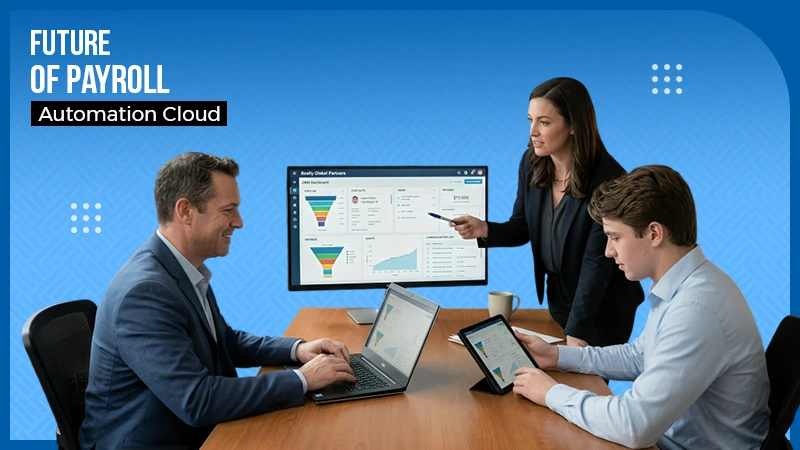
For decades, processing pay was seen strictly as a tedious administrative function. Today, the landscape is shifting dramatically. For HR professionals and business owners, the future of payroll: how automation and cloud technology are transforming payroll management is no longer…
By Team Accountiod

As we enter 2026, the global supply chain landscape is defined by a level of volatility that few leaders could have predicted. Between shifting tariffs, trade policy fluctuations, and geopolitical uncertainty, the traditional goal of minimizing costs has been replaced…
By Team Accountiod