
Security Measures Of Business Accounts: Safeguarding Your Company's Financial Data

Are you a small business owner or a part of a larger corporation? Regardless of the size of your team, you most likely have a business account. This type of bank account is an essential tool for managing company finances, transactions, and cash flow.
However, the increasing number of cyber threats and business identity theft highlights the importance of its security. Alarmingly, a report showed that 79% of companies experience some form of business theft. More stringent security methods have become essential.
Let’s discuss the critical security measures banks implement to protect business accounts and their data.
The Need for a Business Account
There is more to a business account than just holding company money. It serves as the financial backbone of your operations. Cards and accounts, such as Genome business account, have something in common. Their main goal is to handle large volumes of transactions. They also provide detailed financial records and separate personal and business finances. All of these are crucial for accurate accounting and tax purposes.
They also offer specialized services such as payroll processing, merchant services, and credit facilities. Plus, having a dedicated ledger enhances your company’s credibility and professionalism.
With these advantages comes the responsibility, however. Institutions need to ensure these accounts are well-protected from potential threats.
Encryption and Secure Communication Channels
The most common solution to prevent data breaches is via multi-layered encryption. It involves converting sensitive data into a coded format that is unreadable without a key. So, even if data is intercepted, it remains secure and inaccessible to unauthorized individuals.
- Data Encryption: Banks usually utilize AES with 256-bit keys. It’s currently one of the most secure methods available. It keeps all data stored and transmitted from business accounts.
- Secure Sockets Layer (SSL) and Transport Layer Security (TLS): These methods connect channels between the bank’s servers and the user’s device. They encrypt the data exchanged during online banking sessions and ensure that sensitive information is protected from eavesdropping and tampering.
- Encrypted Email Communication: Banks use EES when sharing sensitive financial information via email. This prevents unknown parties from accessing confidential information.
- Multi-Factor Authentication: Banks implement MFA to add an extra layer of security. Besides the usual password, it requires an additional form of verification, such as a fingerprint, OTPs, or facial recognition.
Advanced Fraud Detection and Monitoring Systems
To mitigate potential fraud threats, banks are continuously enhancing their detection and monitoring systems. These are vital for real-time security:
- Real-Time Transaction Monitoring: Advanced algorithms and artificial intelligence are used to monitor transactions as they occur. They analyze transaction patterns and flag any unusual activities. For example, if a transaction is attempted from an unfamiliar location, the system will trigger an alert.
- Behavioral Analytics: Banks use data to develop a baseline of normal user behavior. They do this by analyzing factors such as login times, transaction types, and device usage. Then, the system detects anomalies that might indicate fraudulent activity. If a transaction falls outside the established norms, it is flagged for review.
- Machine Learning Models: This system uses AI to train on vast datasets of legitimate and fraudulent transactions. It allows it to predict and identify emerging risks with high accuracy.
- Automated Alerts: Businesses are immediately notified of any suspicious activities through notifications. It might sound very basic, but this allows companies to take swift action, such as freezing the account or verifying the transaction, to prevent potential losses.
User Permissions
Lastly, the main culprit for account hacking is improper access control protocols. However, banks worldwide have created many processes to prevent this, both in personal and business accounts.
- Role-Based Access Control (RBAC): Banks implement RBAC to restrict access to data based on the user’s role within the organization. Certain layers depend on the user’s job functions. For example, a cashier might have access to transaction processing functions but not to high-level financial reports.
- Segmentation of Duties: To prevent conflicts of interest and reduce the risk of fraud, banks enforce this principle. It means that critical tasks are divided among multiple employees. Basically, no single individual has complete control over all aspects of a transaction.
- Audit Trails and Logging: By using the bank’s ecosystem, you’ll be able to track everything digitally. Everything from login attempts to changes to account settings has a footprint. Regular audits of these help detect and investigate suspicious activities
- Time-Based Access Restrictions: Not all have this feature, but some institutions can limit employees’ access to business accounts. For instance, it may be restricted to business hours only, reducing the risk of unauthorized access during off-hours.
Wrap Up
These are just the most basic security steps banks provide for business accounts. However, these measures are not static. They require continuous evaluation and improvement to stay ahead of emerging risks. Through comprehensive audits, banks can identify potential vulnerabilities and ensure that security protocols are functioning as intended.
Compliance with regulatory standards is another essential aspect. There are a number of rules and regulations that financial institutions need to follow.
The combination of robust security measures, regular audits, and stringent compliance protocols ensures that business accounts are well-protected. As cybercrime continues to rise, maintaining a proactive approach to security will remain each organization’s number one goal.
Related Posts

Market volatility can test even the most confident investors. Sharp price swings, economic uncertainty, and unexpected global events often trigger emotional reactions that lead to rushed financial decisions. While some investors panic during downturns, professional fund managers approach volatility with…
By Team Accountiod
A cash loan in Singapore can get money into your hands within hours, not weeks. Workers, parents and small business owners across the island turn to licensed moneylenders when a bank’s timeline does not match their urgency. Whether you need…
By Team Accountiod

Buy a car is a thrilling experience, until the aspect of financing comes in between. Conventional banks tend to deny applicants with one credit report, and thousands of purchasers are left with no option. That is the very place that…
By Khushboo Chhibber

At a time when the American financial world is quickly becoming digital-first, Coyyn.com Digital Money is poised to be a central point of interaction between cryptocurrency education, gig economy services and wealth management. Table of Contents: Why Digital Money Matters…
By Khushboo Chhibber

A gate provision is a legal provision in hedge fund documentation that restricts the amount of money that may be withdrawn by investors one redemption period at the fund level or on an individual investor basis. Table of Contents: What…
By Khushboo Chhibber
Every business owner recognizes this scenario: working tirelessly, generating strong sales, but not seeing those results reflected in the bank account. This is a common situation among small business owners. The distinction between a struggling start-up and a sustainable, profitable…
By Team Accountiod
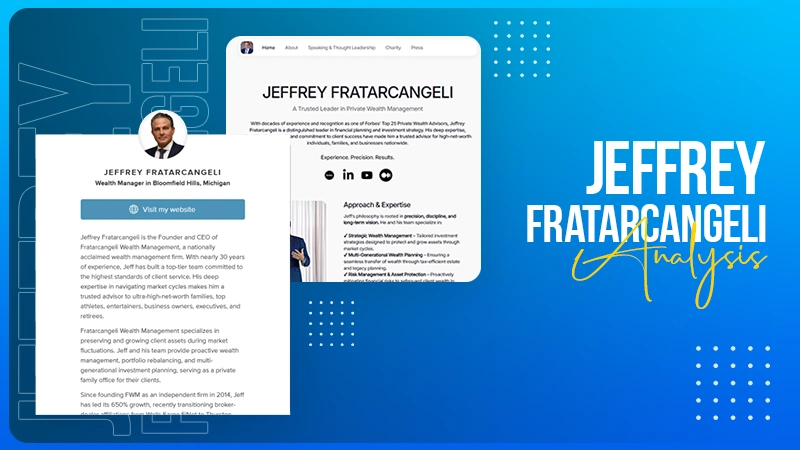
Markets hate uncertainty. This fundamental truth guides investors through volatile periods, especially when trade policies shift. In an interview on Detroit’s “The Pulse,” wealth advisor Jeffrey Fratarcangeli offered insights into how increasing clarity around tariff policies impacts market performance despite…
By Team Accountiod
In the modern financial landscape that is rapidly changing, businesses and investors are dependent on platforms capable of providing real-time and precise insights. FintechZoom.com Business has made it its mission to be one of such platforms, i.e. providing financial news,…
By Aaron Harris
The digital age has brought a new face of financial structures to the world, and the most popular digital currency is currently the Bitcoin, representing cryptocurrencies. FintechZoom.com Bitcoin has become a trusted source of insights and analytics on Bitcoin among…
By Aaron Harris