
People no longer have to leave their houses to do their banking thanks to the proliferation of internet banking, commonly known as online banking. Aside from the obvious benefit of portability, online banking also has several additional advantages such as better interest rates and fewer costs.
Before making a final decision on a financial institution, it is important to determine what kind of bank you are looking for. Which do you prefer, an actual brick-and-mortar bank with its ATMs, or the option to do all of your banking from your computer or smartphone?
Though an online bank and a traditional one have many similarities, there are also important distinctions. If you’re still on the fence about using an online bank, keep reading to learn more about the benefits and drawbacks.
How Does Internet Banking Work?
Without physical locations, customers of online banks may use their computers or mobile devices to access and manage their accounts. Customers may do anything from paying bills and making wire transfers to depositing checks with the use of online banking services.
Online banks provide mostly mobile access, although most brick-and-mortar banks also provide online access to account statements. With a computer or mobile device, you can check your bank account whenever you choose, even if you never get to see a real live banker in person.
The Benefits of Online Banking
Higher Rates
Most online banks have greater interest rates than their brick-and-mortar counterparts. Online banks provide the greatest interest rates for checking and savings accounts since they do not have the overhead of traditional banks.
For instance, the finest online savings accounts provide annual percentage yields (APY) in the mid-1.50s. Savings accounts at some of the larger traditional banks yield as little as 0.01% APY. This is much lower than the national average savings rate of 0.05% and may build up quickly with a substantial balance.
Cut Costs
Since online banks don’t have to cover the costs of maintaining physical locations, they may offer lower or even zero transaction fees. You will save money on a variety of costs connected with using a checking or savings account, such as those charged for insufficient funds and monthly service.
In contrast, major traditional banks often assess service fees of roughly $10 per month for checking accounts, although these may sometimes be waived if you satisfy specific criteria, such as maintaining a minimum balance of $1,500.
A Greener Alternative
One of the major environmental benefits of using an online bank is the elimination of paper networking. With a USB stick or by storing files digitally in the “cloud,” storing and keeping track of data is a breeze.
In addition, this data is readily available when you need to compile records for a tax audit. As a result, you can do your bit to help the environment by banking online with a clear conscience.
Accessibility
Online banking allows you to access your bank accounts and financial services whenever and wherever you have access to the internet, whether on a desktop computer, laptop, tablet, or smartphone. Phone contact with customer assistance is usually available around-the-clock, seven days a week.
Disadvantages of Electronic Banking
Lack of Any Actual Locations
For those who want personal service, conventional banks often provide branch locations near their customers. That may be helpful if you ever need to modify your banking setup or get extra financial services, such as a loan.
Many conventional financial institutions also give current clients attractive mortgages, car loans, and credit card incentives. If you bank online, you may not have as much chance to interact with bank employees face to face.
Complex Cash Deposits
Online banks may deposit checks by taking pictures of the front and back using their mobile banking apps. However, depositing funds at many internet banks might be cumbersome.
For instance, you may need a deposit-taking ATM to move money from a conventional bank to your online account. You might also purchase a money order with cash and deposit it electronically using your online bank’s mobile app. While some banks work with third-party services to allow stores to accept cash deposits, they usually charge $5 for deposits. If you intend to do this regularly, it’s worth verifying the bank’s policies.
Final Thoughts
Both brick-and-mortar banks and those that exist only in cyberspace provide useful services. You may find that online bank that near to your location and suits your needs best if you’re looking for better interest rates and reduced fees, and aren’t likely to visit a branch very often.
It’s important to remember that if you decide to create an online account, you don’t have to close your traditional bank account. You may get the best of both worlds by maintaining accounts with both a conventional bank and an internet bank.
Related Posts
Market volatility can test even the most confident investors. Sharp price swings, economic uncertainty, and unexpected global events often trigger emotional reactions that lead to rushed financial decisions. While some investors panic during downturns, professional fund managers approach volatility with…
By Team Accountiod
A cash loan in Singapore can get money into your hands within hours, not weeks. Workers, parents and small business owners across the island turn to licensed moneylenders when a bank’s timeline does not match their urgency. Whether you need…
By Team Accountiod

Buy a car is a thrilling experience, until the aspect of financing comes in between. Conventional banks tend to deny applicants with one credit report, and thousands of purchasers are left with no option. That is the very place that…
By Khushboo Chhibber
At a time when the American financial world is quickly becoming digital-first, Coyyn.com Digital Money is poised to be a central point of interaction between cryptocurrency education, gig economy services and wealth management. Table of Contents Why Digital Money Matters…
By Khushboo Chhibber

A gate provision is a legal provision in hedge fund documentation that restricts the amount of money that may be withdrawn by investors one redemption period at the fund level or on an individual investor basis. Table of Contents What…
By Khushboo Chhibber
Every business owner recognizes this scenario: working tirelessly, generating strong sales, but not seeing those results reflected in the bank account. This is a common situation among small business owners. The distinction between a struggling start-up and a sustainable, profitable…
By Team Accountiod
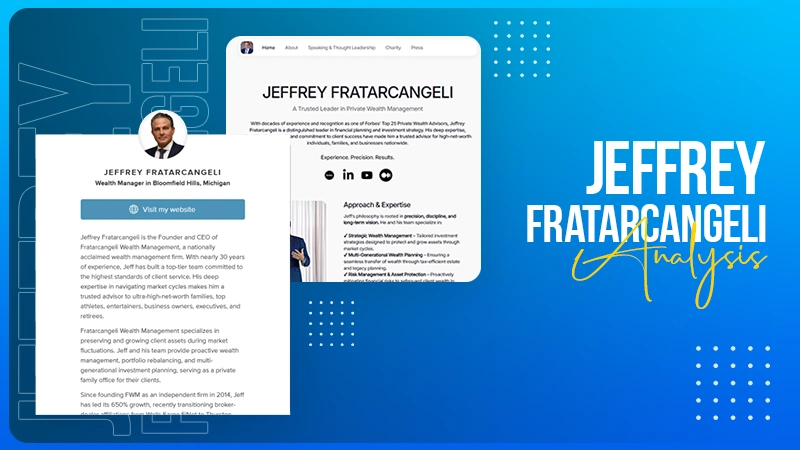
Markets hate uncertainty. This fundamental truth guides investors through volatile periods, especially when trade policies shift. In an interview on Detroit’s “The Pulse,” wealth advisor Jeffrey Fratarcangeli offered insights into how increasing clarity around tariff policies impacts market performance despite…
By Team Accountiod
In the modern financial landscape that is rapidly changing, businesses and investors are dependent on platforms capable of providing real-time and precise insights. FintechZoom.com Business has made it its mission to be one of such platforms, i.e. providing financial news,…
By Aaron Harris
The digital age has brought a new face of financial structures to the world, and the most popular digital currency is currently the Bitcoin, representing cryptocurrencies. FintechZoom.com Bitcoin has become a trusted source of insights and analytics on Bitcoin among…
By Aaron Harris