
Key Takeaways
- IT Outsourcing: It is a practice in which a company hires external service providers who are experts in the field to handle the tasks and meet the quality benchmark.
- Types of IT Outsourcing Model: Onshore, Offshore, Nearshore, Cloud-based, Dedicated Team, Staff Augmentation, Project Based, and SaaS.
- How to pick the best IT Outsourcing model for your company?
- Know your budget.
- Check the previous performance.
- Evaluate the model.
Business owners can get overwhelmed by doing all the tasks themselves, but they can ease their burden by outsourcing web development services. They can take the help of external expertise to reduce the burden.
Many types of IT Outsourcing models can work with all kinds of businesses in the market. The key is to choose the right model that aligns with the vision and goals of the company.
In this blog, we’ll discuss the types of IT Outsourcing models and how to pick the right one. So keep on reading till the end to learn more.
Types of IT Outsourcing
IT Outsourcing itself is vast and has many branches. These are the different types of IT Outsourcing models that you can choose from:
Onshore Outsourcing
It is also known as Domestic Outsourcing. In this, one obtains services from a professional outside the company but in the same country. The purpose is to hand over non-essential work to third parties so that you can work on the main component of the business.
Onshore Outsourcing is the go-to model for most companies, as it makes communication easier. Plus, the same time zone and the same culture make working together smoother.
Offshore Outsourcing
It is the exact opposite of on-shore Outsourcing. In this model, the companies hire help from someone living outside the country. Many big companies work with outsourcing businesses in other countries. The main benefit is that one can find professionals at lower costs and can work remotely.
E-commerce companies generally assign customer support, data entry, and order fulfillment tasks to business process outscoring of the foreign country.
Nearshore Outsourcing
In this model, the companies partner with service providers in neighboring or nearby countries to save on cost. Many companies choose this model because, even though the professionals are from another country, the proximity makes time zones similar, which makes it easier to work and communicate.
Another advantage is that you can select from a pool of talent and even set up a meeting if necessary.
Cloud-based Outsourcing
In this model, the companies take help from business process outsourcing to oversee all the cloud-based tasks. By outsourcing the services, businesses can enjoy the advantages of cloud computing and a dedicated team to manage their clouds. The providers can create adaptable cloud architectures and transfer your current infrastructure and the company’s core applications to the cloud.
Based on the work and partnerships, there are a few other types of IT Outsourcing models that one can check out:
Dedicated Team Outsourcing Model
You must have noticed that Amazon, Flipkart, and other businesses have a dedicated team of customer support. Do you think all the support executives work in Amazon’s or Flipkart’s office? No, the entire team is outsourced.
In this model, the vendor provides you with a dedicated team of experts who oversee the tasks and work for the best interest of the company. This model is suitable for large enterprises and longer projects.
Project-Based Outsourcing
In this model, the companies hire professionals to work on a specific project. Let’s say, company X needs to develop software, so what it can do is hire developers, marketers, and other required experts to create and market the software. The price structure can be hourly-based or contract-based for this model.
Staff Augmentation Outsourcing Model
You can directly work with the professionals in this model. The vendors can provide you with the number of experts you need to hire for the work. This model is best to go with if you want to scale up your business but do not have enough capital to spend.
Software as a Service (SaaS)
SaaS is the newest form of outsourcing, which eliminates the need to make upfront investments in hardware, software licenses, and infrastructure. In this model, the service provider bears the cost of the machines and software programs.
The companies generally charge subscriptions based on the number of users or usage levels.
This model reduces upfront costs and allows for better budget control due to the use of technology.
So these are the types of IT Outsourcing models you can choose from to expand your business. Now that you’re aware of this, let’s go ahead and discuss how you can select the right model for your business in the next section.
How to Select the Right IT Outsourcing Model for Your Company?
Note that the one-size-fits-all method does not apply here, and every business is unique and has its own needs. So, how can you decide on the type of model? First, you need to determine all the shortcomings of your business. After that, here are certain factors that will help you decide:
- Evaluate the Models: Once you determine what the problem is, then you can look over different outsourcing models. Each one has its strengths and weaknesses, so you need to carefully examine your needs and what IT outsourcing has to offer.
- Check the Performance Metrics: The main reason why a company hands over some of its work is to get better results and positive outcomes. So you must evaluate the performance of the experts of the BPOs to see if it fits you.
- Know Your Budget: If you are low on capital, you can not afford to hire a dedicated team. Instead, you can pick SaaS or staff augmentation. You first need to get a clear idea of how much you can spend on outsourcing, then research each of the outsourcing models.
Besides, you must figure out if you want to hire a remote professional, if you want a similar time zone, how much you want to get involved in the process, and how big your project is.
You can take the help of your team members to find out the answers to these questions, which will set you on the path of selecting the right IT Outsourcing model for your company.
So this was all about the types of IT Outsourcing models and how you can pick the right one for your business. We hope this blog will guide you in the process.
Related Posts
Business travel can be essential for growth, networking, client relationships, and expansion opportunities. Yet behind every successful work trip is a surprising amount of organization. Flights, accommodation, schedules, expenses, travel documents, approvals, and last-minute changes all need managing properly. Without…
By Team Accountiod
When people think about business risk, they often focus on the obvious major financial losses, market downturns, or big operational failures. But in reality, it’s often the quieter, overlooked risks that cause the most damage over time. These are the…
By Team Accountiod
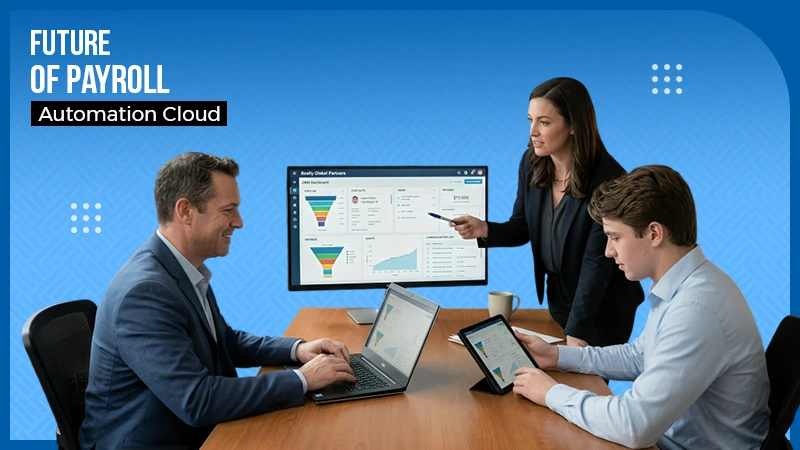
For decades, processing pay was seen strictly as a tedious administrative function. Today, the landscape is shifting dramatically. For HR professionals and business owners, the future of payroll: how automation and cloud technology are transforming payroll management is no longer…
By Team Accountiod

As we enter 2026, the global supply chain landscape is defined by a level of volatility that few leaders could have predicted. Between shifting tariffs, trade policy fluctuations, and geopolitical uncertainty, the traditional goal of minimizing costs has been replaced…
By Team Accountiod
Expansion can expose the cracks in your business’s foundation. What was once a manageable fleet with a low volume of orders can quickly turn into chaos when you try to scale up your business. Too often, we see delivery operations…
By Team Accountiod
At your portfolio size, taxes are no longer a once-a-year exercise. They shape how you structure accounts, track cash flow, and report income across multiple LLCs. The IRS expects precision. Schedule E reporting requires clean categorization. Yet many investors still…
By Team Accountiod
If you run a business (or you support someone who does), it’s hard to ignore the growing sense of pressure that comes from late payments, rising costs, and cash-flow gaps. When money slows down, many companies try to “wait it…
By Team Accountiod

One of the most important aspects of running a successful business is managing your finances. Whether you are a start-up business, a small business owner, a freelancer, or a large business entity, professional accounting services can assist you in saving…
By Team Accountiod

In today’s data-driven world, brand name normalization rules play a critical role in maintaining clean, consistent, and usable data across systems. Whether you are managing SEO campaigns, CRM databases, or analytics dashboards, inconsistent brand naming can lead to inaccurate insights…
By Khushboo Chhibber